Research & development
Building tools that give musicians back the perception of their own movement.
Before becoming a physiotherapist for musicians, I studied industrial design and musical instrument making, writing my dissertation on instrument ergonomics. Ever since, research and development has gone hand in hand with my clinical work: imagine a device, build it, put it in musicians’ hands, observe what it changes, then start again.
These tools share a single aim: to make visible and audible what musicians no longer perceive, in order to prevent functional disorders and to support recovery from musician’s focal dystonia without freezing the movement.
Digital feedback
Photo, video, motion sensors, heart-rate sensor: every measurement becomes a mirror. Musicians see and hear their movement from the outside, compare what they feel with what is actually happening, and adjust.
Movement sonification
Turning movement into sound: a tension, an acceleration, a shift of weight become audible while playing. This is the common thread of my PhD at the Paris Brain Institute and IRCAM (Sorbonne Université, 2026–2029), devoted to musician’s focal dystonia and motor learning: perception, motor control and interoception.
The instrument and the body
Fitting the instrument, the way it is held and its surroundings to the body that plays, rather than the other way round. This ergonomic approach, rooted in instrument design, shapes both the advice I give in sessions and the prototypes I build.
Run Rhythm
Run Rhythm turns walking or running on a treadmill into an interactive musical situation. Footfalls, changes in cadence, accelerations and disruptions are captured, processed in real time, then translated into sound, rhythm and light. Musicians get immediate feedback on how they organise themselves in time and in their body: they produce a rhythm, perceive its effects, adjust and keep creating.
At the crossroads of artistic performance, motor learning and music technology, this research-creation device makes it possible to observe how a body produces rhythm, absorbs a disruption and invents a response. It opens a path for exploring, in focal dystonia, movement variability and adaptation to change: the right to make mistakes.
- Movementwalking, running, footfalls, stops and restarts
- Capturemotion, pressure or impact sensors
- Processingreal-time analysis in a musical environment
- Feedbacksound, rhythm and light
Prototypes
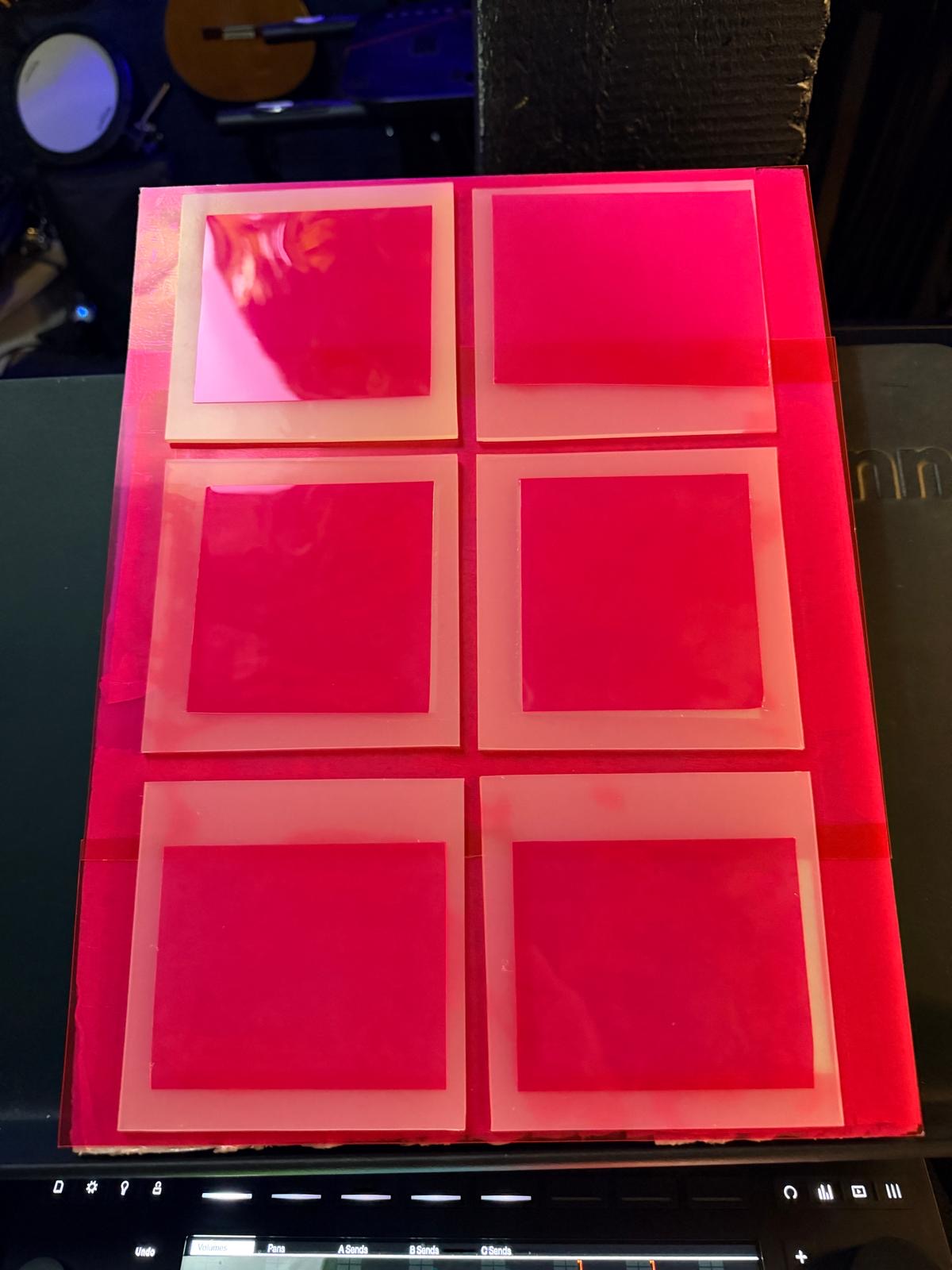
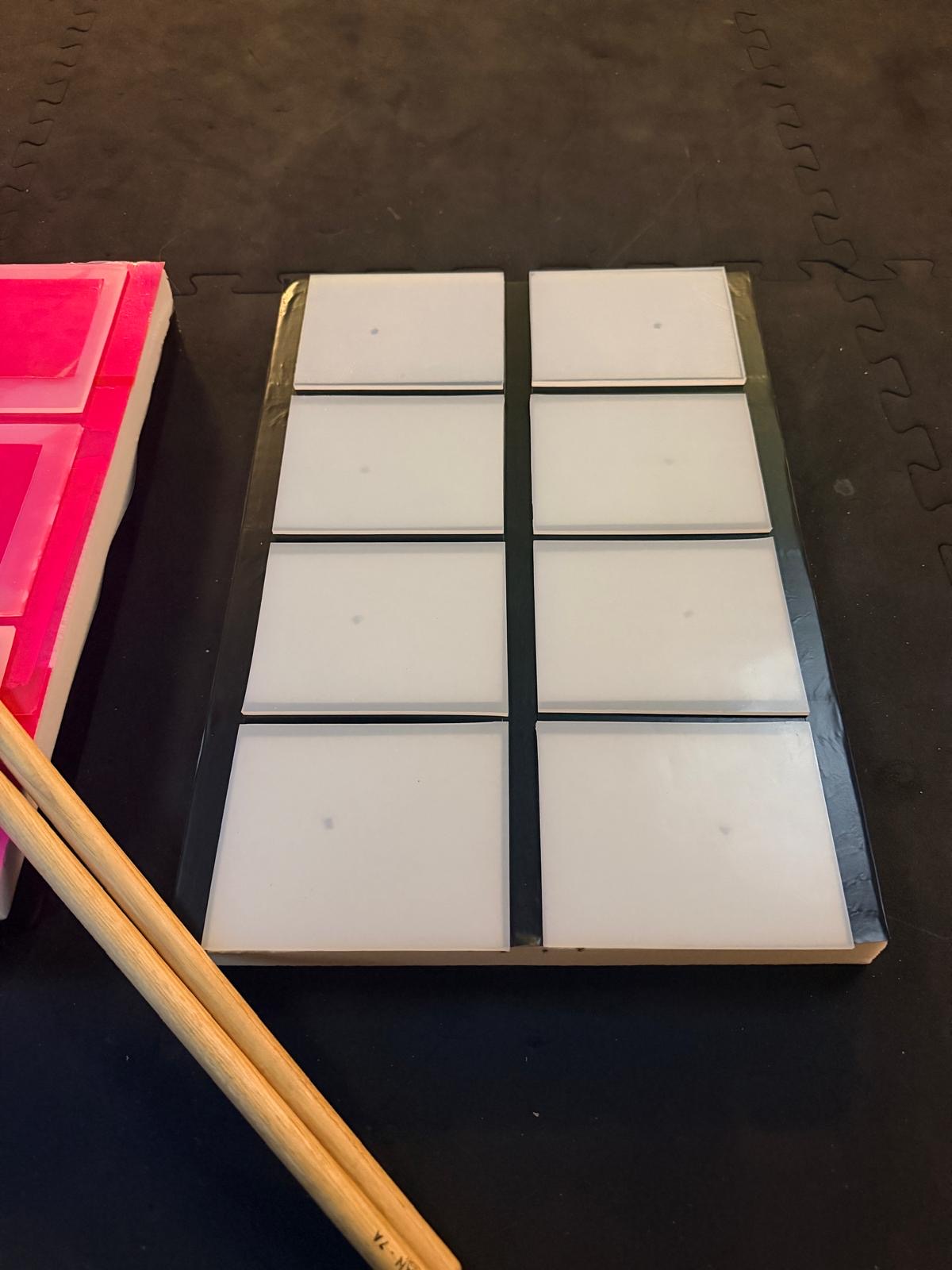
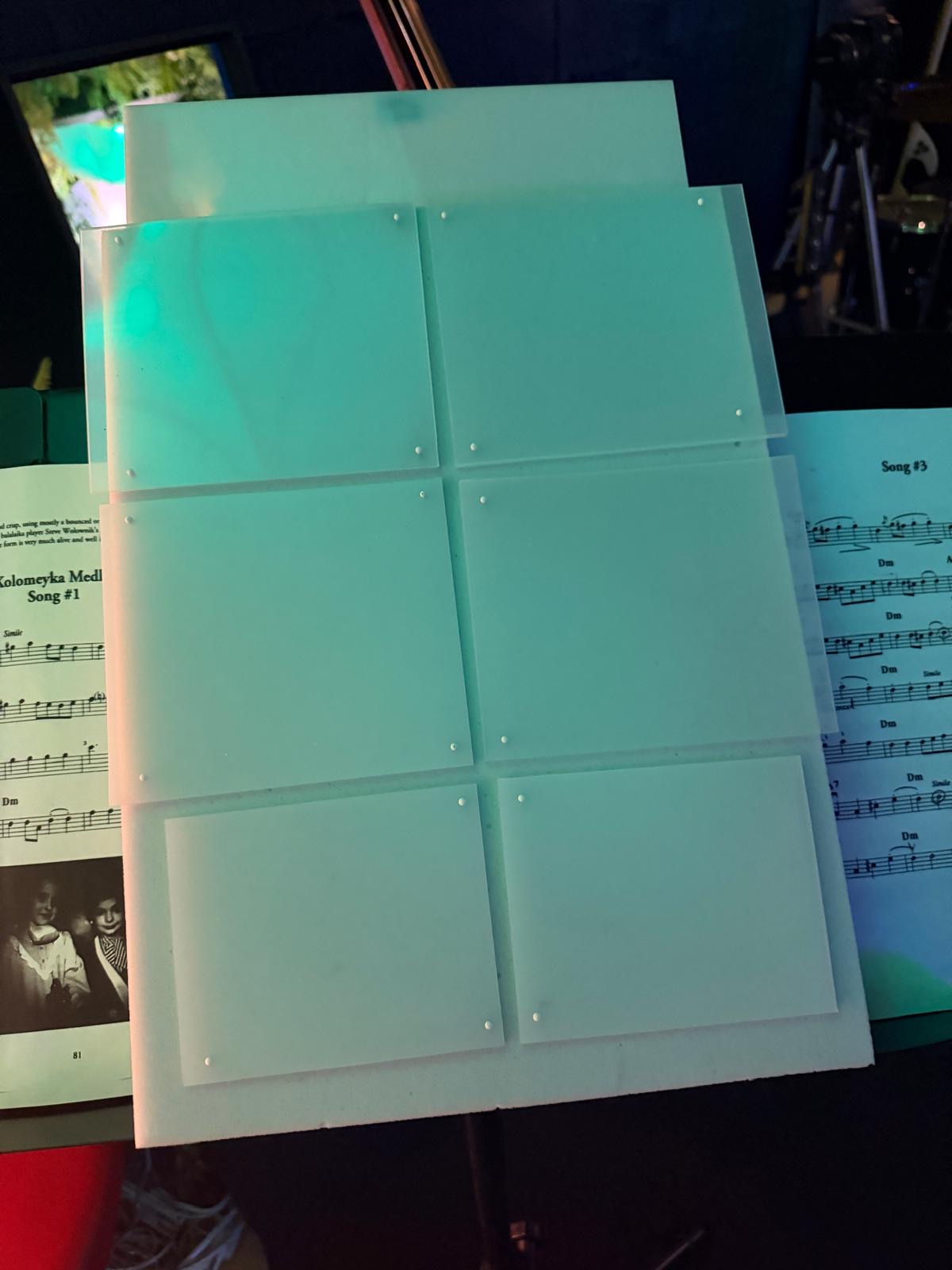
Striking surfaces fitted with piezoelectric sensors, connected to Max and to a lighting rig: every strike becomes sound and light.